
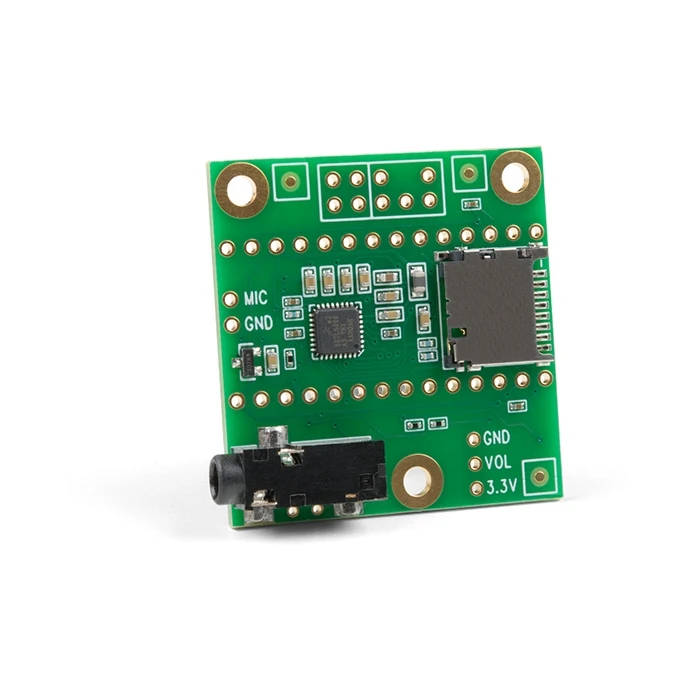
This shield is the all-in-one solution for adding high-quality, 16-bit, 44.1kHz (CD-quality) stereo audio to your Teensy 4.0 project. It’s built around the powerful SGTL5000 stereo codec chip, which provides a full-duplex (simultaneous input and output) audio stream. Unlike simple DACs, the SGTL5000 includes a built-in headphone amplifier, allowing you to drive headphones or line-out to speakers directly from the 3.5mm audio jack.
Unlock the Teensy Audio Library
When paired with a Teensy 4.0, this shield unlocks the full potential of the powerful Teensy Audio Library. The Teensy’s ARM Cortex-M7 core includes powerful DSP instructions that can be leveraged for real-time processing. This allows you to create complex audio projects with ease, including:
- Synthesizing complex waveforms
- Applying advanced audio effects (reverb, chorus, delay)
- Mixing multiple sound streams
- Performing real-time FFT (spectrum analysis)
- Building sophisticated instruments and audio-reactive projects
Integrated Hardware for Full-Featured Projects
The audio shield comes equipped with all the essential hardware to support your creations, making it a powerful tool for a huge variety of sound-based applications.
- 3.5mm Headphone Jack: A high-quality stereo output for headphones or line-level connections.
- Micro-SD Card Slot: Included on every board for playing back audio files stored on a microSD card (not included).
- Optional Volume Pot: A space is provided to optionally solder a 25k potentiometer for physical volume control.
- Optional Flash Memory: An empty footprint allows you to add a SPI flash chip for extra onboard storage.
This shield is designed to stack perfectly with the Teensy 4.0. Please note that the two 14×1 headers required to connect the shield to the Teensy are not included. This allows you to choose your preferred stacking method (such as stacking headers or a header/socket pair).
We recommend also picking up a microphone and a pair of 14-pin single-row socket headers to complete your shield.
Note: Basic soldering is required to attach headers to this shield.